
High Carbon Steel Strips: Grades, Annealed vs Hardened
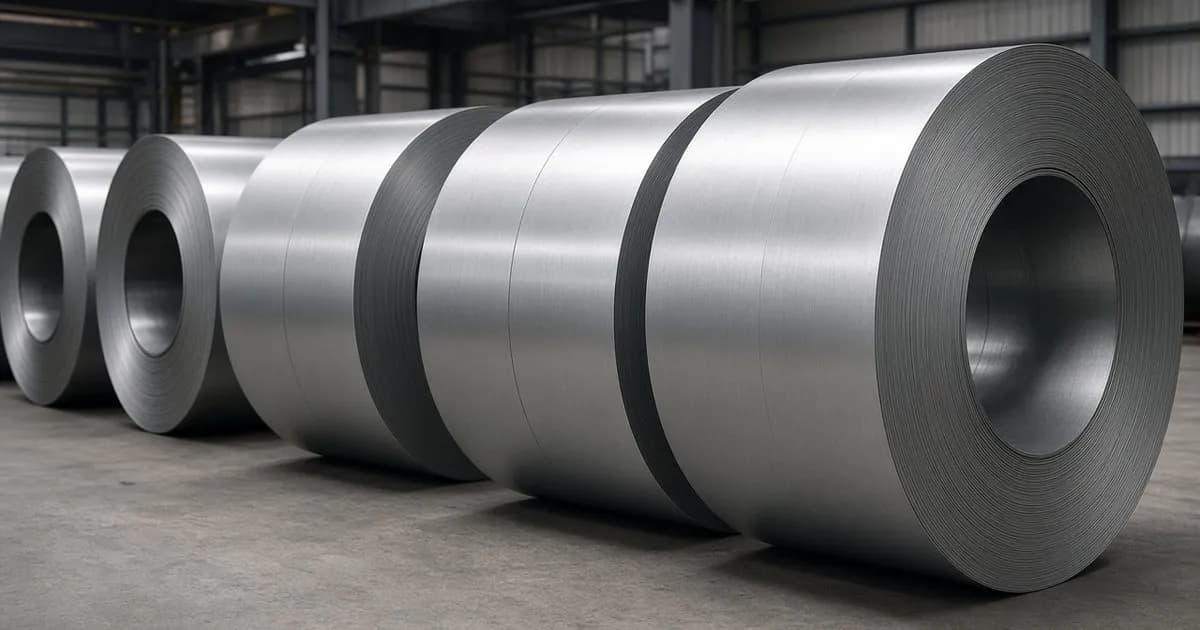
High carbon steel strips are cold-rolled carbon steels whose carbon content is high enough that, after heat treatment, they can reach the hardness, elastic limit and wear resistance needed for springs, blades, clips and similar parts. Buyers usually meet them in two forms: annealed or specially tempered coil that will be formed and then hardened, and already hardened & tempered steel strips supplied at a stated hardness.
This article is a specification guide, not a price list. It explains how “high carbon” is classified, which grades appear on BTC Precision Strips’ product and equivalents pages (and which familiar names, such as C45 or SAE 1070, should not be assumed), and how annealed, special-temper, rolling-hard and hardened-and-tempered supply actually differ. BTC has manufactured and exported precision steel strips from Kolkata since 1958. Confirm every figure against the quotation and the mill test certificate.
What counts as high carbon steel strips?
There is no single carbon cut-off used by every standard and every mill, so a grade that one table calls “medium carbon” may appear as “high carbon” in another. For strip buying, that matters: if you and the supplier are using different boundaries, you may think you have ordered C80 when the enquiry was read as a medium-carbon C55.
BTC’s own pages illustrate the point, and should be read together rather than forced into one definition:
- The CRCA medium carbon steel strips page describes medium carbon steels as having about 0.30–0.60% carbon and 0.50–0.70% manganese, and lists product grades C-40, C-55 and C-65.
- The CRCA high carbon steel strips page describes high carbon steels as containing 0.80–1.25% carbon with manganese from 0.50–0.90%, refers to them as commonly known as spring steel strips, and lists product grades C-80, C-98 and C125 / HC21 / 125CR1.
- BTC’s steel grade equivalents table groups DIN C45 / SAE 1045 (0.40–0.50% C) as medium carbon, and then shows C55 / SAE 1055 (0.50–0.60% C), C80 / SAE 1080 (0.75–0.90% C) and C100 / SAE 1095 (0.95–1.05% C) in the high-carbon rows.
In other words, C-55 and C-65 sit on a boundary: they appear in BTC’s medium-carbon product list, they are used as hardened-and-tempered spring grades, and C55 is also shown in the grades table’s high-carbon group. When you enquire, name the grade and chemistry, not only the words “high carbon”.
Grades of high carbon steel strips — and close neighbours
Use the chemistry and the standard on the order, not a nickname alone. The figures below are taken from BTC’s live product and grades pages, or from published standard designations where that is stated. They are not a claim that every pair of names is a drop-in substitute.
Grades BTC lists as CRCA high carbon steel strips
| Grade listed by BTCCarbon % (product page)Silicon %Manganese %Sulphur / phosphorus | ||||
| C-80 | 0.75–0.85 | 0.10–0.35 | 0.50–0.80 | ≤ 0.05 / ≤ 0.05 |
| C-98 | 0.90–1.05 | 0.10–0.35 | 0.50–0.80 | ≤ 0.05 / ≤ 0.05 |
| C125 / HC21 / 125CR1 | 1.10–1.30 | 0.10–0.25 | 0.30–0.60 | ≤ 0.05 / ≤ 0.05 |
On the same page, BTC lists a thickness range of 0.07–5.00 mm and a width range of 8–500 mm, with a note that in thickness lower than 0.6 mm, 4 mm wide material can be supplied. Surface finish is listed as bright. Material is supplied in coil form, special inside and outside diameters can be maintained, and cut lengths are available if required.
Related grades on the hardened-and-tempered page
The hardened-and-tempered spring steel product lists C-75 / C-80 / C75S together in the 0.70–0.85% carbon range, and C-98 / C100S at 0.90–1.05%, along with C55S, C67S, C85S, 50CrV4 / 50Cr4V2 and 75Ni8. If you need the strip already heat-treated, use that product page and state the hardness, rather than ordering annealed high-carbon coil and assuming it will arrive hard.
SAE 1080, SAE 1095, C75S / CK75 and SAE 1070
These names appear often on international enquiries. Only some of them are on BTC’s grades table, and none of the SAE numbers should be treated as a BTC product SKU unless the quotation says so.
- SAE/AISI 1080 and 1095. BTC’s grades page shows SAE/AISI 1080 with DIN C80W1 in the high-carbon group at 0.75–0.90% carbon, and SAE/AISI 1095 with DIN C100W1 at 0.95–1.05% carbon. SAE J403, which defines the chemical compositions of SAE carbon steels, gives a heat analysis for 1080 of 0.75–0.88% carbon and 0.60–0.90% manganese, and for 1095 of 0.90–1.03% carbon and 0.30–0.50% manganese (with phosphorus and sulphur maxima). Those standard ranges are close to, but not identical with, BTC’s C-80 and C-98 product chemistries. Compare the actual limits before substituting.
- C75S and CK75. C75S (material number 1.1248) is the EN designation for a carbon spring-strip grade, widely specified under EN 10132-4. CK75 (also written Ck75) is the older DIN name for the same material family. BTC’s hardened-and-tempered page lists C75S / C-75 / C-80 (1.1248) together. That is a useful mapping, not an automatic chemical identity with every “75” or “80” enquiry you may hold.
- SAE 1070. SAE J403 gives 1070 a heat analysis of 0.65–0.75% carbon and 0.60–0.90% manganese. In the trade it is often compared with EN C67S. It is not listed as a product grade on BTC’s CRCA high carbon page, and it does not appear as a SAE column entry on the grades table reviewed for this article. If your drawing says 1070, ask the mill to confirm a comparable grade and to put the chemistry on the quotation.
C45 is not a high carbon grade
C45 (DIN) and SAE/AISI 1045 appear on BTC’s grades page as medium carbon steel, with 0.40–0.50% carbon. BTC’s medium-carbon product list includes C-40 at 0.35–0.45% carbon, which is in the same neighbourhood, plus C-55 and C-65. If the drawing says C45 or 1045, do not send a high-carbon C-80 enquiry and hope the mill will reinterpret it. Start from the medium-carbon product and state the delivery condition (fully annealed or rolling hard, as that page allows) and the later heat treatment you intend to use.
Annealed versus hardened high carbon steel strips
Carbon content tells you what the steel is capable of after the right heat treatment. Delivery condition tells you what you will actually receive in the coil. Confusing the two is a common source of rejected lots.
| ConditionWhat BTC’s pages listWhat you can usually do with it | ||
| Fully annealed CRCA high carbon | Maximum hardness of 200 VPN | Form, blank or coil in the soft condition, then harden and temper to the finished hardness in your plant or at a heat treater. |
| Special temper (high carbon) | Hardness ranging from 230 VPN to 270 VPN | Limited forming compared with fully annealed material; further heat treatment may still be required, depending on the part. |
| Rolling hard / special temper cold rolled | BTC’s rolling hard steel strips page describes as-rolled hard strip: an annealed starting thickness is rolled to the required thickness to reach a target hardness, then pinch-passed, with no final anneal. It is offered in low, medium and high carbon grades. | Punching and forming where formability is limited; the strip can be heat-treated afterwards if required. The page notes that choosing the correct starting thickness is a matter of expertise — so state the target hardness, not only the finished size. |
| Hardened and tempered | The hardened-and-tempered product lists 30 HRC minimum to 58 HRC maximum, to customer specification, with bright polished, blue, brown or grey surfaces. | Stamp or use at, or close to, the supplied hardness. This is a different product from annealed high-carbon coil. |
Vickers hardness (VPN / HV) and Rockwell C (HRC) are different scales. Do not convert a 200 VPN anneal limit into HRC in the RFQ unless you and the supplier have agreed the conversion method. BTC provides a steel hardness conversion tool and a short explainer of Brinell, Rockwell and Vickers testing; use them as a discussion aid, and put the scale you want on the order.
If your process needs a large bend or a deep form, start with fully annealed material and heat-treat after forming. If your process is mainly slitting, punching or shallow forming, and you want the finished hardness in the coil, specify hardened and tempered strip and the HRC range. If you want a work-hardened coil without a final anneal, say so clearly and give the target hardness in VPN or HV, which is how BTC states the annealed and special-temper ranges on the high-carbon page.
What high carbon steel strips are used for
BTC’s high carbon product page lists surgical blades (scalpels), metal-cutting band-saw and hacksaw blades, knives for cutting foam and plastics, circlips and hanger clips, textile needles, and automobile components and agricultural tools. Related hardened-and-tempered applications — seat-belt and retractor springs, wiper-blade steel, flapper valves, saw blades, doctor blades, clips and masonry tools — often use the same carbon family in the already heat-treated condition.
The application should drive carbon level, delivery condition and hardness:
- Blades and knives usually need enough carbon to take and hold an edge, a hardness matched to the cutting duty, and an edge condition that suits tooth cutting or grinding. Higher-carbon grades such as C-98 or, where specified, C125 / HC21 / 125CR1 are often discussed for wear-intensive cutting work; that is a starting point, not a substitute for the drawing.
- Springs, circlips and retainers need resistance to permanent set and a useful fatigue life. Through-hardening matters when the section is thick enough that a shallow hardened case would allow the core to yield. BTC’s high-carbon page makes that hardenability point explicitly.
- Formed clips and agricultural parts may start as annealed or special-temper strip and be heat-treated after forming. State the forming route or you may be quoted a coil that is already too hard to bend.
How to specify high carbon steel strips on an RFQ
A complete enquiry should include:
- Grade name and, if you have it, the standard (for example a C-80 enquiry, or an EN C75S / 1.1248 enquiry). If you only have a SAE number, say so.
- Delivery condition: fully annealed, special temper, rolling hard, or hardened and tempered.
- Hardness or tensile range, with the scale (VPN, HV or HRC).
- Thickness and width, with tolerances. Do not assume the published range is your tolerance.
- Edge condition and surface finish.
- Coil inside and outside diameter, or cut length and length tolerance.
- Quantity and any packing or rust-prevention requirement.
- The documents you need, including the type of mill test certificate.
Send that list through BTC’s enquiry form or call +91 85849 48988. If you are comparing grades, BTC’s material grade comparison tool can sit next to the official grades table, but the quotation should still restate chemistry and hardness in words.
Frequently asked questions
Is C80 the same as SAE 1080 or C75S?
They sit in the same carbon neighbourhood, but they are not automatically identical. BTC lists C-80 at 0.75–0.85% carbon on the high-carbon product page, groups C75S / C-75 / C-80 (1.1248) on the hardened-and-tempered page, and shows SAE/AISI 1080 with DIN C80W1 at 0.75–0.90% carbon on the grades table. SAE J403’s 1080 range is 0.75–0.88% carbon with a different manganese range. Ask the mill to confirm the chemistry it will supply.
Can I order SAE 1070 high carbon steel strips from a C67 or C75 enquiry?
Only if the mill agrees a comparable grade and writes the chemistry down. SAE 1070 is a defined SAE J403 composition (0.65–0.75% C). It is not a listed BTC high-carbon product grade. C67S is a closer carbon neighbour than C-80; do not assume a substitute.
Why is annealed strip quoted in VPN and hardened strip in HRC?
Because those are the scales commonly used for those hardness ranges, and they are the scales BTC uses on the two product pages. Put the scale you want on the order, and do not mix them without an agreed conversion.
When should I buy rolling-hard strip instead of fully annealed coil?
When you want a target hardness obtained by cold reduction rather than a final anneal, and your forming is limited. BTC notes that selecting the starting thickness for the reduction is a matter of expertise, so give the finished thickness and the target hardness together.
What thickness and width can I specify?
BTC’s high-carbon page lists 0.07–5.00 mm thickness and 8–500 mm width, with 4 mm width possible below 0.6 mm thickness. Those are published ranges, not your order tolerances. State the exact size and the tolerance you need.
Are high carbon steel strips the same as spring steel strips?
Often, but not always. BTC’s high-carbon page uses “spring steel” as a common name for this carbon range, and many springs are made from it. Alloy spring grades and already hardened-and-tempered strip are specified separately. Name the grade and condition.
Next step
If you need annealed or special-temper high carbon steel strips, start on that product page and send grade, hardness scale, size and quantity through the enquiry form. If you need the material already heat-treated, use the hardened-and-tempered product page instead. BTC Precision Strips has supplied precision steel strips since 1958; a complete specification is the shortest path to a usable offer.
BTC Admin
Metallurgy Specialist
Precision steel strip specialists and metallurgists at BTC Precision Strips, delivering precision cold rolled and hardened tempered steel solutions since 1958.